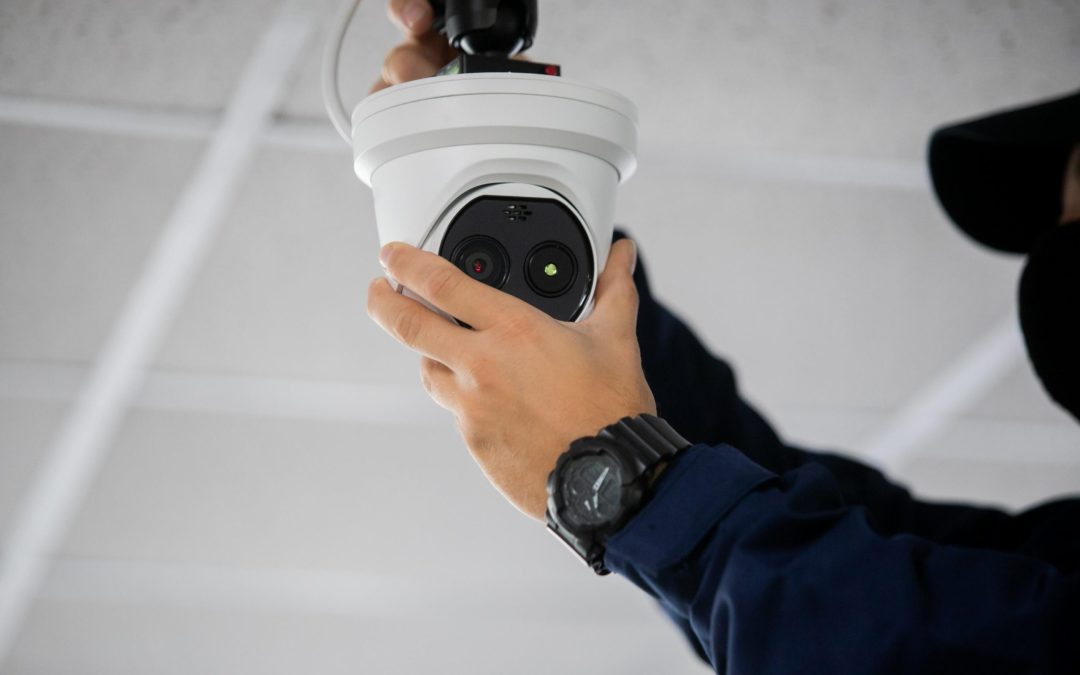
Security cameras are the eyes and ears of modern homes. They’re a smart investment to say the least, providing round-the-clock surveillance for your property. These cameras also come with many different features, designed to improve your security.
This includes motion detection, night vision, two-way audio and real-time mobile alerts to name a few. With that said, are all these features necessary to have in the first place? What features should your home cameras actually have?
Here’s what to look for in home security cameras:
- Video Quality
The first thing to check is video resolution. Look for cameras that support at least 1080p, though 2K or 4K resolution offers sharper, more detailed images.
Modern cameras also use video compression technologies like H.264 and H.265 to ensure smoother streaming while saving storage space. These formats help balance video quality and storage efficiency, especially when using cloud or local storage.
- 24/7 Night Vision
Homes need protection even when the lights are off. That’s where night vision comes in. Most security cameras use infrared (IR) LEDs or colour night vision to capture usable footage in low-light environments.
With that said, outdoor cameras should have sufficient night vision range to cover your compound.
- Smart Detection
Today’s cameras are getting smarter with motion detection and AI human detection. These cameras not only detect intruders but also reduce false alarms triggered by pets, insects and even trees.
Some advanced models also offer facial recognition and smart tracking, allowing the camera to follow movement automatically. These intelligent features are especially useful if you want more precise monitoring.
- Weather Resistance
If you are installing cameras outside, check the weatherproof rating carefully. Look for protection standards such as IP67 or similar ratings, which indicate resistance against dust and heavy rain.
This is important because outdoor cameras are constantly exposed to changing weather conditions.
- Storage Options and Subscriptions
Security cameras usually offer cloud storage and local storage (microSD card, NVR, or DVR systems). Cloud storage allows you to access footage anytime through mobile app integration, but it may come with subscription fees.
On the other hand, local storage gives you more control over your data and avoids recurring costs. It’s a good idea to check the video retention period as well, especially if you want to keep recordings for reference.
- Connectivity and Smart Home Capability
Modern cameras rely on Wi-Fi connectivity for remote monitoring. Check whether the camera supports mobile app integration. It should also have remote access and compatibility with your existing home automation systems or voice assistants.
Stable connectivity is essential for receiving real-time alerts instantly.
- Two-Way Communication and Alarm
Many home cameras now come with two-way audio. This not only lets you listen to what’s happening but also allows you to speak to visitors or family members through the camera.
Additional security features such as a siren alarm feature or built-in spotlight can help deter suspicious activity when motion is detected.
- Installation and Build Quality
Finally, consider how the camera will be installed. Some models are battery-powered cameras, which are easier to mount but require regular charging, while wired cameras offer more consistent operation.
Pay attention to field of view (FOV) and wide-angle lens design, because a wider viewing angle means fewer blind spots around your property.
What Look for in Home Security Cameras: Indoor vs Outdoor Cameras
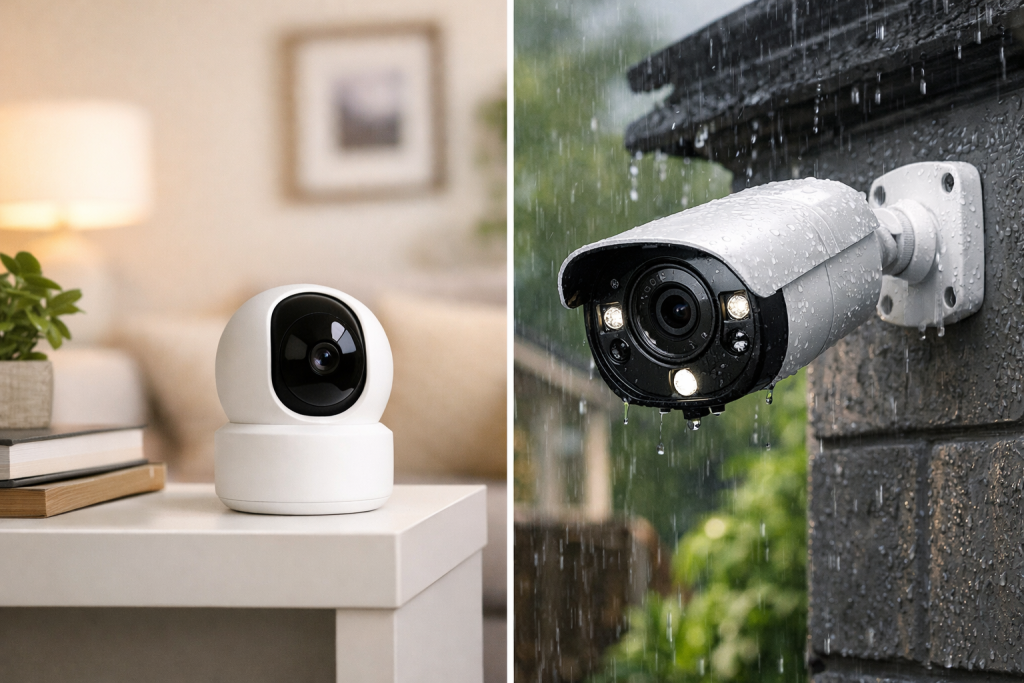
Indoor and outdoor cameras have different purposes. Choosing the right one depends on your needs, and homeowners may opt for either one or a combination of both. Here’s how they differ:
- Indoor Cameras: Indoor cameras are designed for enclosed environments. They’re typically smaller, lighter and more discreet. This makes them more suitable for living rooms, hallways, nurseries or home offices.
Since they are not exposed to harsh weather, they don’t require heavy-duty weatherproof ratings. Instead, indoor models often require more smart features. This includes facial recognition, AI human detection and two-way audio to name a few.
They also tend to prioritise design and compact mounting options, so they blend seamlessly into your interior. Generally, indoor cameras are ideal for:- Watching over living rooms or entryways
- Monitoring children or elderly family members
- Keeping an eye on pets
- Outdoor Cameras: Outdoor cameras on the other hand, are built for durability. They must withstand rain, heat, humidity and dust. These cameras often come with stronger night vision range, built-in spotlight and siren alarm features to deter intruders.
A wider field of view (FOV) is also important outdoors, as you’ll likely want to monitor a larger area. Generally, outdoor cameras are ideal for:- Securing outdoor spaces such as gardens or balconies
- Monitoring front and back entrances
- Watching over driveways and gate areas
What to Look for In Home Security Cameras: Quick Checklist
| At least 1080p resolution (2K or 4K is a bonus) | ✅ |
| Reliable night vision with sufficient range | ✅ |
| Secure storage options (cloud or local) | ✅ |
| Stable Wi-Fi connectivity | ✅ |
| Weatherproof rating (for outdoor use) | ✅ |
| Mobile app with real-time alerts | ✅ |
| Two-way audio (if needed) | ✅ |
| Good field of view to minimise blind spots | ✅ |
| Warranty and after-sales support | ✅ |
The Bottom Line
Knowing what to look for in home security cameras can help you choose the best camera for your home. While there are many features to look out for, it’s important to not be distracted by unnecessary specifications that don’t actually improve your security.
So take your time, compare different models and find the right camera for your home, because security is about being protected even when you’re not around.
Looking for a home CCTV installation in Singapore? Visit drwifi.3dbrandagency.com/ or contact us to find out more!